Original Equipment Manufacturer (OEM) parts are safer than aftermarket parts, yet many insurance companies still refuse to use them
Today I’m posting a blog post from Russell D. Longcore. Russell is a contributor to my blog, and is an insurance claims consultant, an insurance adjuster and author of “Insurance Claims Secrets Revealed.” His book outlines strategies for policyholders and claimants to auto maximize accident settlements, and tips to avoid insurance company abuse. It’s a great resource and I definitely recommend it.
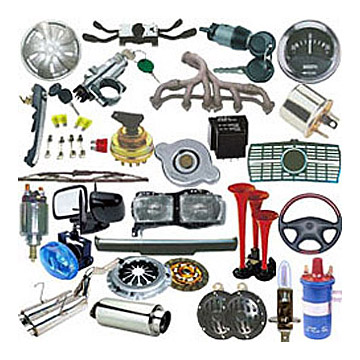
In this post, Russell discusses an appropriate verdict regarding aftermarket parts. For those of you who are unfamiliar with the term, “aftermarket auto parts” it means that a product being installed on or in a vehicle is made by a company other than the original manufacturer. According to wisegeek.com, “Most performance parts are manufactured by aftermarket companies due to their ability to specialize in particular field. Aftermarket parts range anywhere from air intake kits to car graphics kits and chrome rims.”
Here’s what Russell had to say about this important lawsuit:
American Family Mutual Insurance Company was ordered to pay $17 million to settle part of a class action lawsuit over aftermarket parts in Missouri.
A jury in Jackson County, Missouri returned a decision that American Family had wrongly paid automobile damage claims based upon the use of aftermarket replacement parts.
Aftermarket auto parts are not held to the same testing and safety requirements as Original Equipment Manufacturer (OEM) parts. Consequently, they may fit on a car as a replacement part, but the use of an aftermarket part does not constitute repairing the car to the pre-loss condition. Insurers love aftermarket parts because they are considerably cheaper than OEM parts.
The jury verdict affects 315,000 Missouri policyholders who filed claims between May 1990 and December 2004.
Ted Pintar is one of the Plaintiff attorneys. “It (the verdict) sends a clear statement to insurance companies who continue to force inferior aftermarket parts on insureds as part of their claims practices.”
A spokesman for American Family Mutual Insurance Company said that the company would appeal the verdict.
Friends, don’t think for a minute that the insurance companies will just roll over and accept this verdict as a standard for the nation. Every state has its own Department of Insurance, and they will continue to conduct business as usual on a daily basis. So, if you have a car accident, you must still insist IN WRITING that your vehicle be repaired with OEM parts.
First and foremost, your car will not be as safe as it was before the accident if aftermarket parts are used. No insurance company will certify to you that your car, repaired with aftermarket parts, is as safe as a car repaired with OEM parts. And remember, your car insurance policy requires your insurance company to return your vehicle to “pre-loss condition.” No car with aftermarket parts installed qualifies as “pre-loss condition.” It might LOOK like it, but it’s not.
Second, there is the matter of diminished value. Every car loses value once it has been in a collision and has to be repaired. A vehicle repaired with OEM parts will lose less value than one repaired with aftermarket parts.
You must fight for your own safety and the value of your car. The insurance company does not care about either. DEMAND repairs with OEM parts!
Fight and WIN!